
Where Spirit Meets Landscape: Exploring Japan’s Sacred Spaces Through Photography
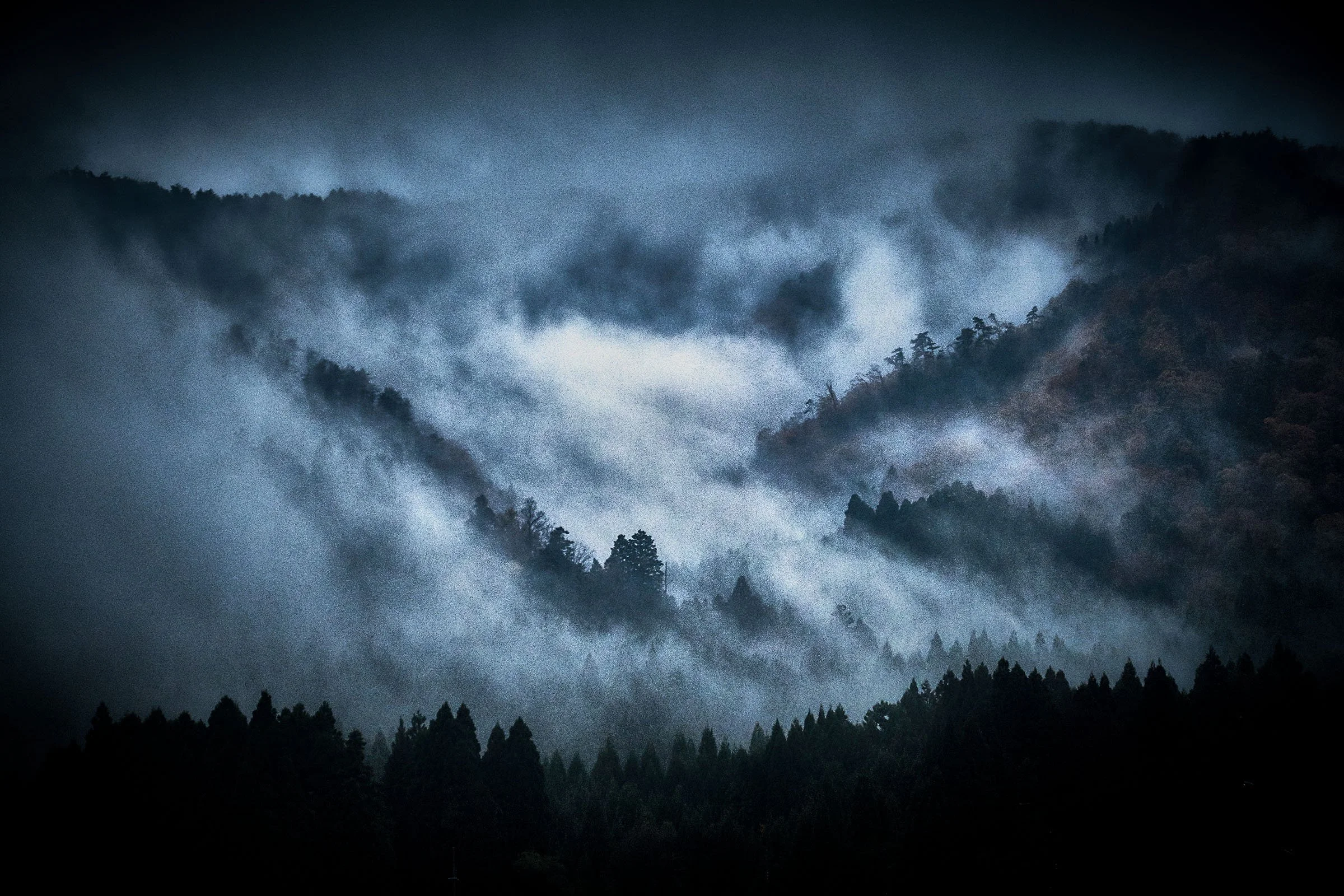
“Foggy Mountains” from “Lost in Kyoto” © Yasuhiro Ogawa
Across Japan, the sacred and the natural are inseparable. Temples hide among cedar forests, torii rise quietly from the sea, and mountains seem to breathe with ancient memory. It is a landscape shaped as much by spirit as by time, a place where stillness, reverence, and beauty coexist. Across past and present exhibitions, Blue Lotus Gallery has explored this meditative terrain through the eyes of Michael Kenna, Yasuhiro Ogawa, and Ulana Switucha, artists united by a shared sensitivity to the spaces where nature and spirit meet.
Michael Kenna: Silence and Form
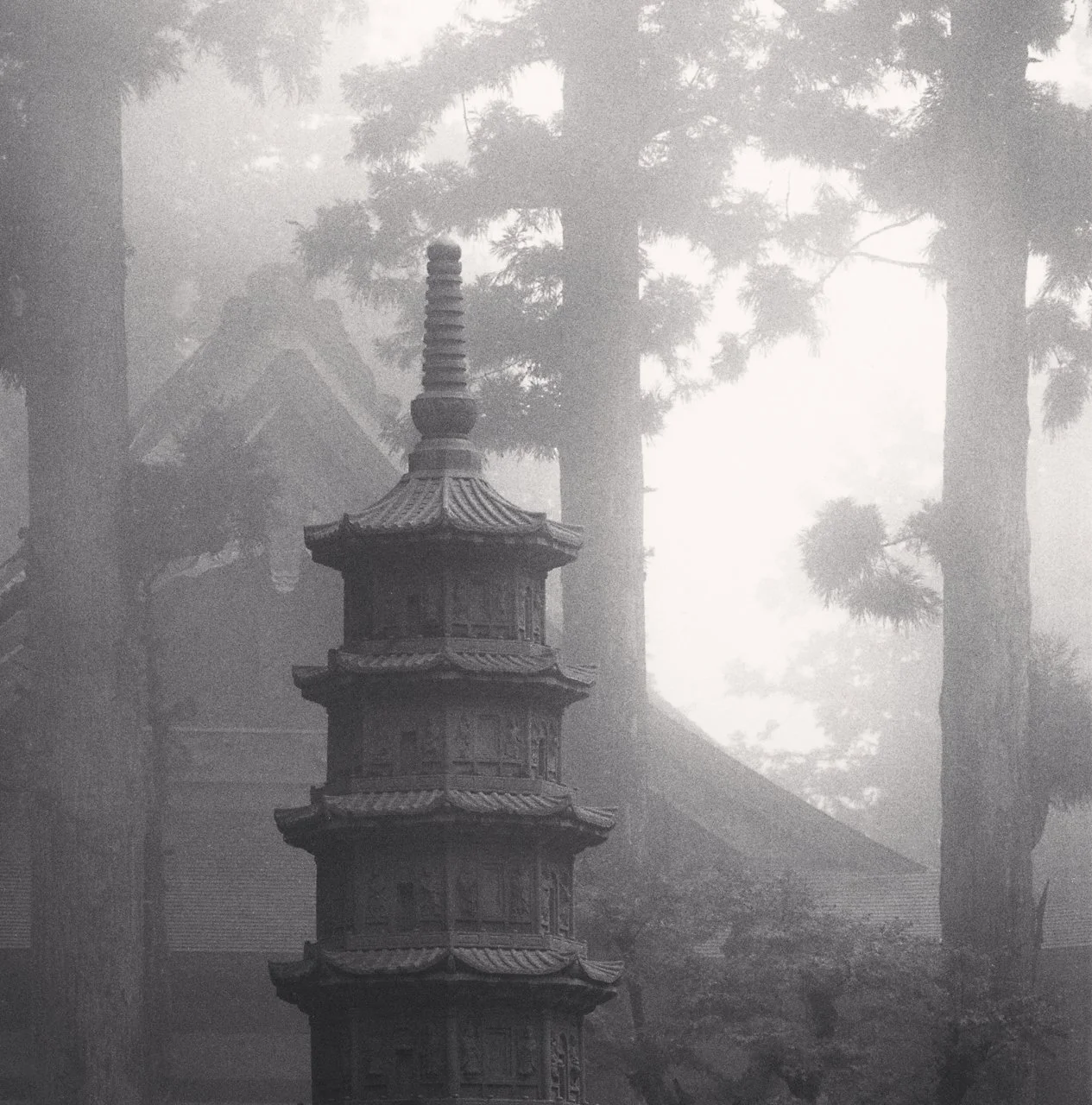
Pagoda, Unpenji, Kagawa, Shikoku, Japan. 2003 © Michael Kenna
For more than forty years, British photographer Michael Kenna has returned to Japan, drawn to its contemplative atmosphere and quiet rituals. Working in black and white, he distils shrines, trees, and snow-covered fields into meditations on light and silence. His long exposures transform the landscape into a realm suspended between the physical and the spiritual.
Books such as Forms of Japan reflect this lifelong dialogue with the country’s sacred spaces. Whether capturing a solitary pine rising from a frozen lake or the faint outline of a temple shrouded in mist, Kenna reveals a Japan shaped by patience, restraint, and an enduring sense of devotion.
Yasuhiro Ogawa: The Journey Within
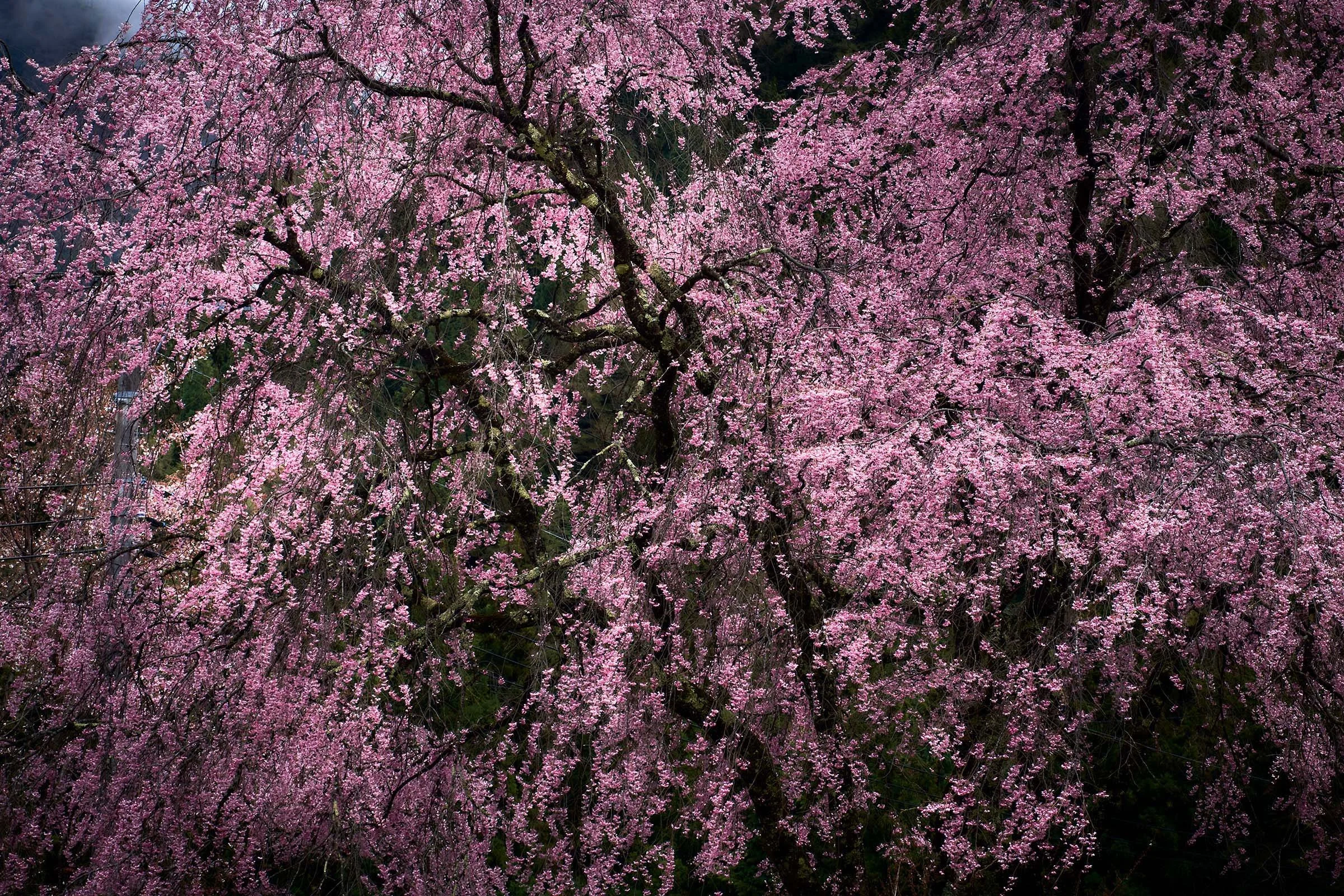
“Cherry Blossom” from “Lost in Kyoto” © Yasuhiro Ogawa
Where Kenna seeks transcendence in stillness, Yasuhiro Ogawa, a Japanese photographer and storyteller, approaches the sacred through movement, memory, and the quiet pulse of everyday life. His celebrated photobook Into the Silence retraces Bashō’s journey through northern Japan, weaving together snow-laden mountains, wind-beaten coasts, and the subtle gestures of travellers and strangers passing through.
Ogawa’s photographs carry the texture of memory: grain, shadow, the melancholy of things disappearing. His more recent book, Lost in Kyoto, deepens this exploration. Printed on black paper, the photographs feel as if they are emerging from darkness, revealing Kyoto as a city shaped not only by temples and rituals, but by the invisible layers of history that live and breathe within it. In both works, Ogawa listens for the human presence within sacred space: the fleeting moments where memory, landscape, and spirit entwine.
Ulana Switucha: Torii and the Sacred Threshold

Biwako, Shiga, Japan, 2016 From “Torii” © Ulana Switucha,
For Hong Kong–based Canadian photographer Ulana Switucha (who previously lived in Japan), the country’s landscapes have long been a source of creative and spiritual resonance. Having photographed Japan for decades, she has, in her most recent work, turned her attention to one of its most enduring symbols: the torii.
These elegant gates mark the threshold between the everyday and the divine, appearing in seas, lakes, and snow-covered plains as quiet sentinels watching over the landscape. In her book and exhibition Torii, Switucha captures them with measured clarity, using soft light, negative space, and long exposures to distil each scene to its essential form. Rising from the tide or standing against winter skies, the gates become meditative focal points, inviting viewers into a space where the spiritual and the natural begin to merge.
A Shared Reverence
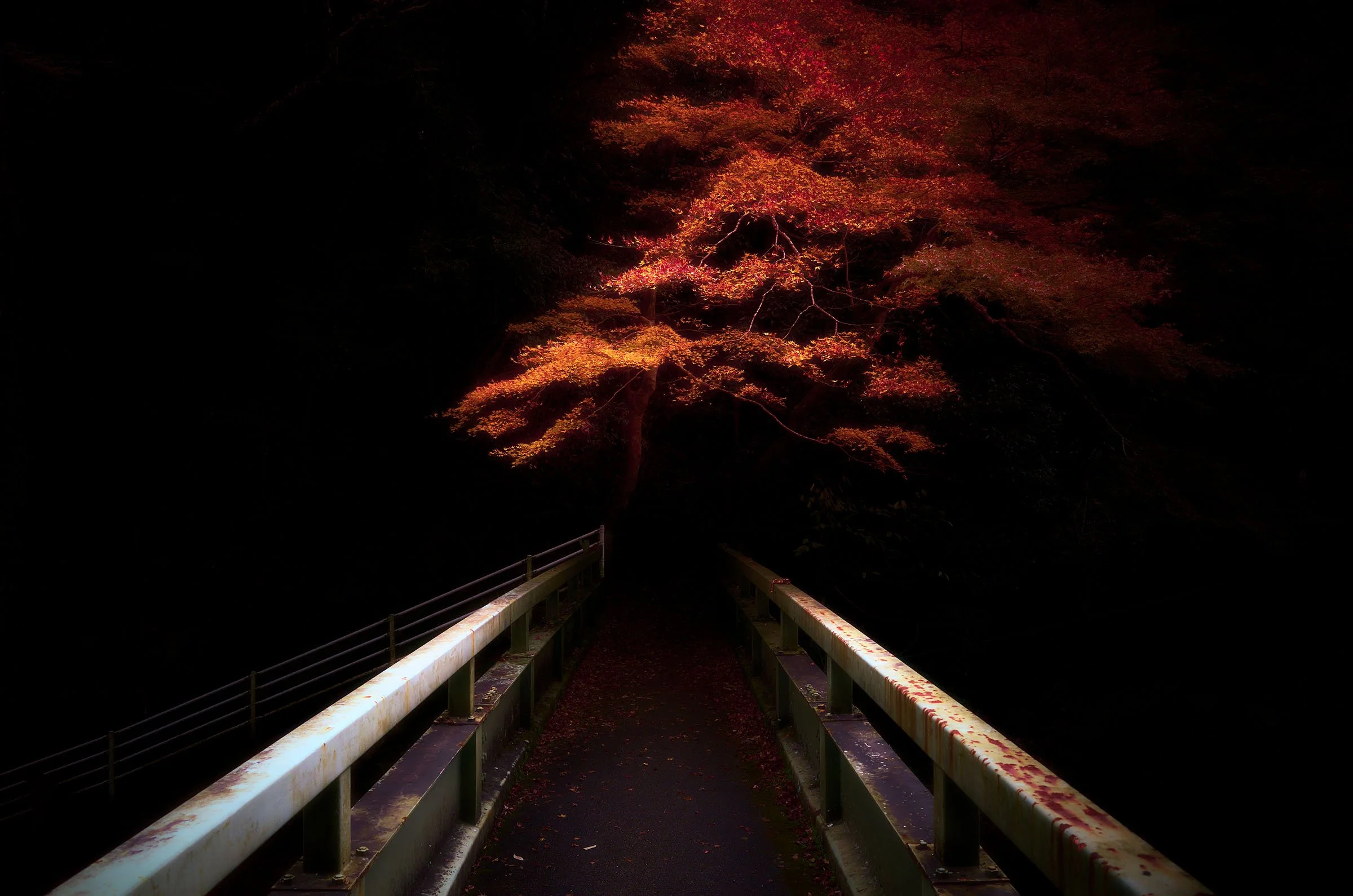
“Autumn Bridge” from “Lost in Kyoto” © Yasuhiro Ogawa
Though distinct in approach, Kenna, Ogawa, and Switucha share a deep sensitivity to Japan’s spiritual landscape, a recognition that the sacred can be found not only in temples and shrines, but in the silence of a forest path, the quiet pull of the tide, or the soft glow of morning light. Their photographs invite us to slow down, to observe, and to feel the subtle presence of history, spirit, and nature that moves through these landscapes.
Together, their work offers a gentle reminder: in Japan, the sacred is not a destination, but a way of seeing — a dialogue between land, time, and the people who pass through it.
Ulana Switucha | Torii, an exhibition and book launch, is on view at Blue Lotus Gallery until 14 December 2025.