Revisiting Shooting Hoops: Austin Bell on Obsession, Scale, and Seeing Hong Kong Anew
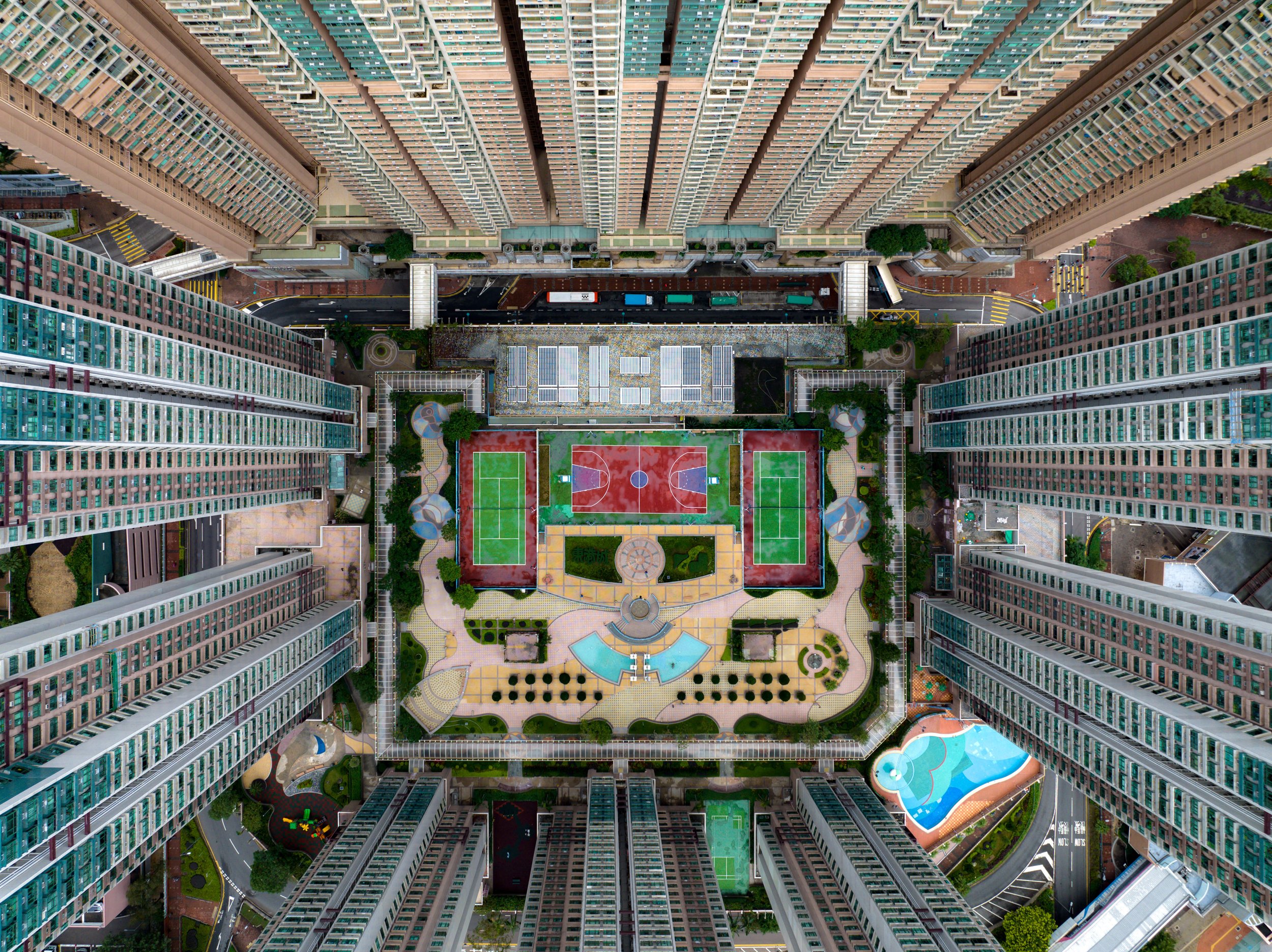
When Shooting Hoops was released in January 2025, Austin Bell could not have fully anticipated its impact. What began as a visually driven curiosity evolved into a monumental photographic undertaking documenting all 2,549 of Hong Kong’s outdoor basketball courts, culminating in a book and an exhibition that launched the American photographer onto the international stage.
Now on view at Blue Lotus Gallery until 8 February, the exhibition revisits this landmark project through a new curatorial lens, offering a chance to reflect on both its origins and its continued evolution.
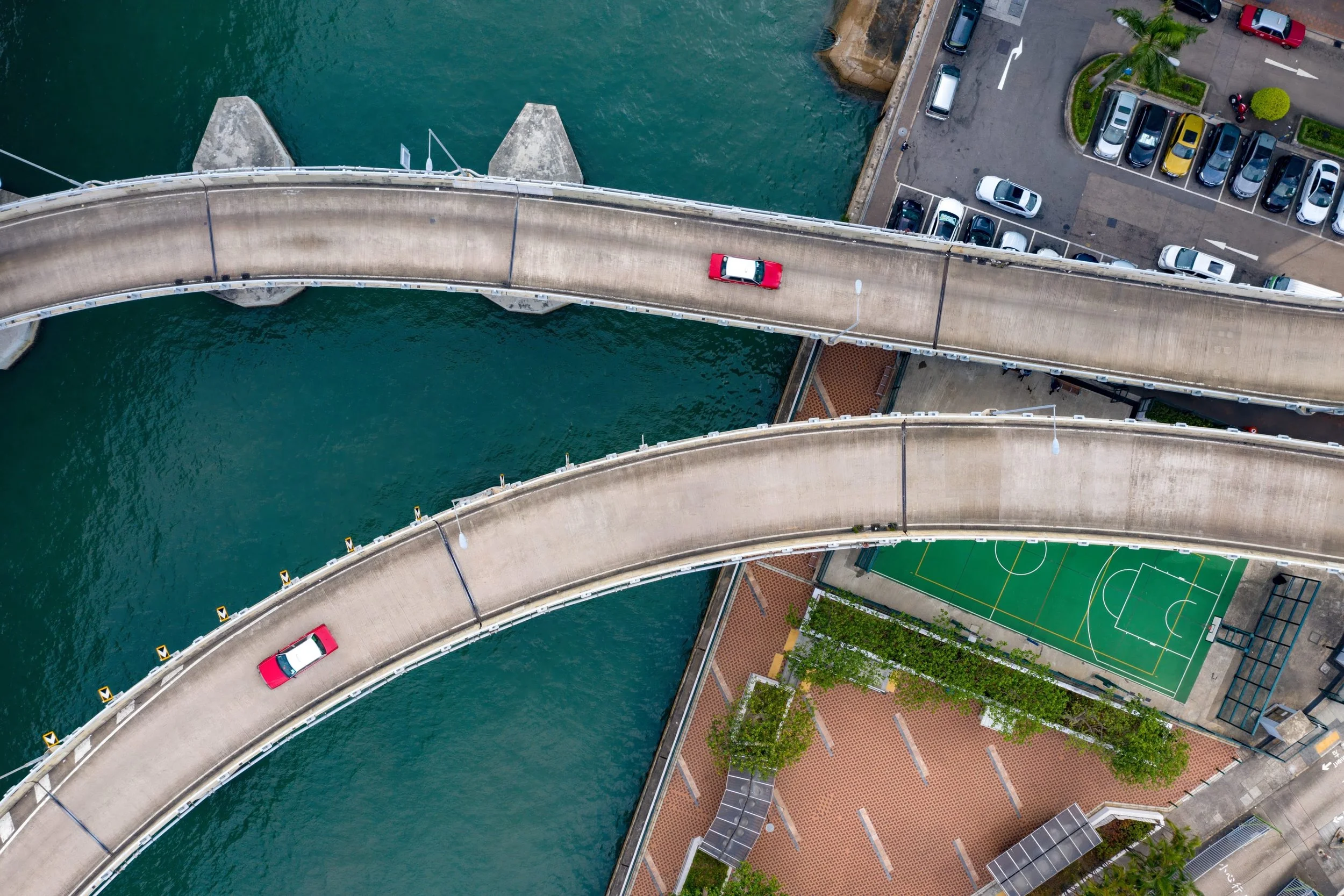
Bell’s interest in Hong Kong’s basketball courts began during his first visit in 2017, after encountering the rooftop court at the vividly coloured Choi Hung Estate. “I thought it was a really cool spot, not so much because it was a basketball court, but just visually,” he says. As he wandered through other neighbourhoods, he began noticing more courts tucked between housing estates, often echoing the bright colours of their surroundings. “I took a few photos just out of curiosity,” Bell explains, “and later, looking back at them, I thought they looked really amazing, especially the drone shots.”
As he explored further, he began noticing similar courts embedded throughout the city, often echoing the colours and geometry of the surrounding housing estates. Reviewing his early images, particularly those taken from above, Bell recognised their potential and returned with a more focused intention.
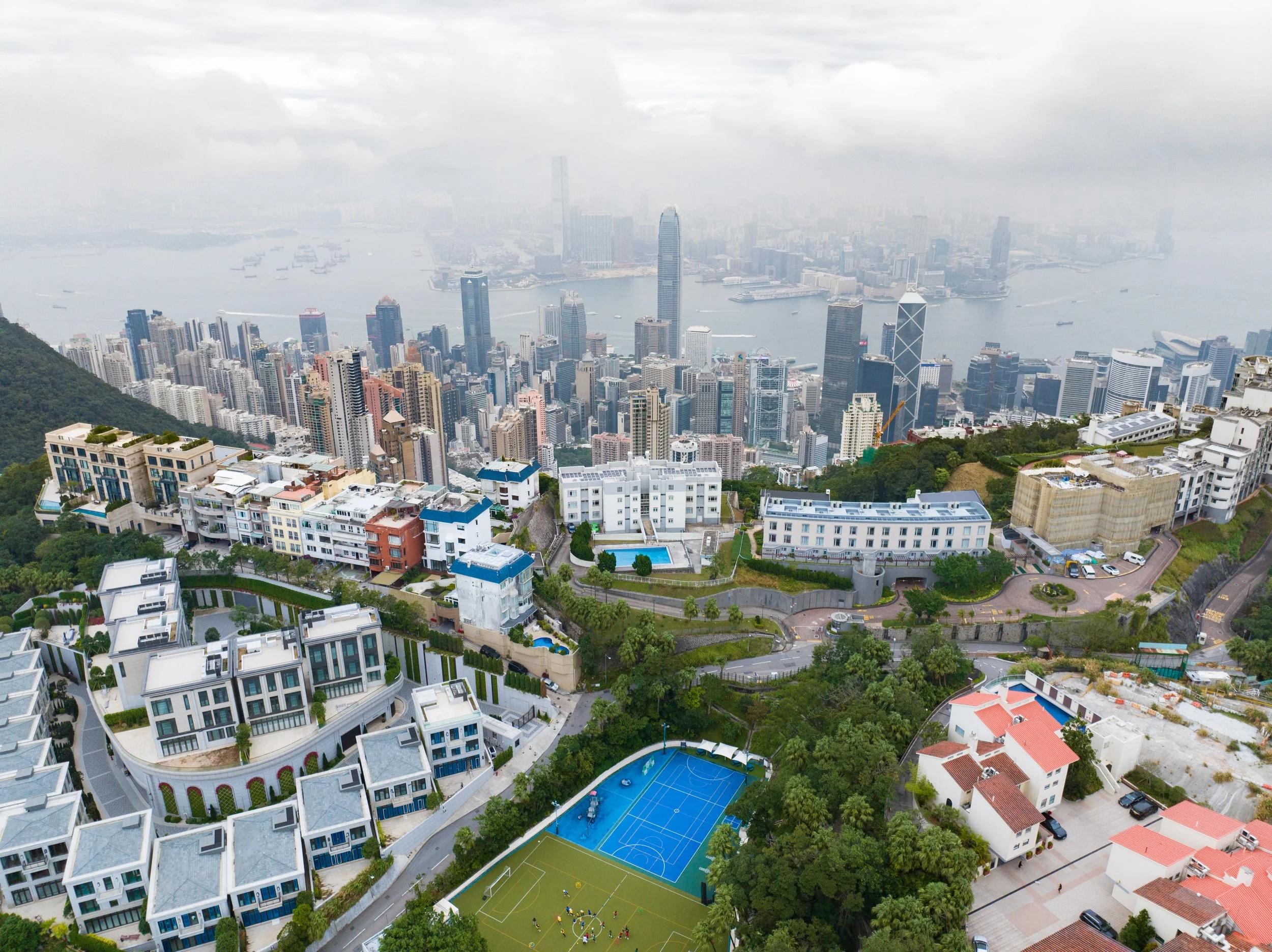
As he began mapping the courts, the scale of the project quickly revealed itself. “Once I started, I kept finding new ones,” Bell recalls. What began as exploration soon became a mission, driven by a desire to be exhaustive. Over multiple visits, he spent more than 140 days shooting and captured over 40,000 photographs, navigating the city entirely by public transport.
The process revealed just how deeply woven basketball courts are into Hong Kong’s urban fabric. Nearly every developed area has one nearby, yet Bell found that only around a third are publicly accessible, with many located within school grounds. He was also struck by the city’s diversity at a district level, an insight that later shaped how the courts were organised in the Shooting Hoops book.

After years immersed in the project, Bell admits he had lost perspective on its sheer scale. Seeing the response when the work was released served as a reminder of its ambition. “I had kind of forgotten how expansive and ridiculous it would be,” he says. The reception affirmed that the project offered something rarely seen: a comprehensive portrait of Hong Kong told through a single, everyday structure.
This exhibition reflects Bell’s evolving relationship with the work. Visitors frequently search for courts tied to their own lives. So many people come in looking for the court they live near, or the one at their school,” he said. Bell himself has watched many of the courts change, with repainting and redesigns continuing across the city. The current presentation foregrounds abstraction, isolating courts through top-down views that emphasise colour, pattern, and geometry. Removed from their immediate context, the courts take on a more formal, almost painterly quality.
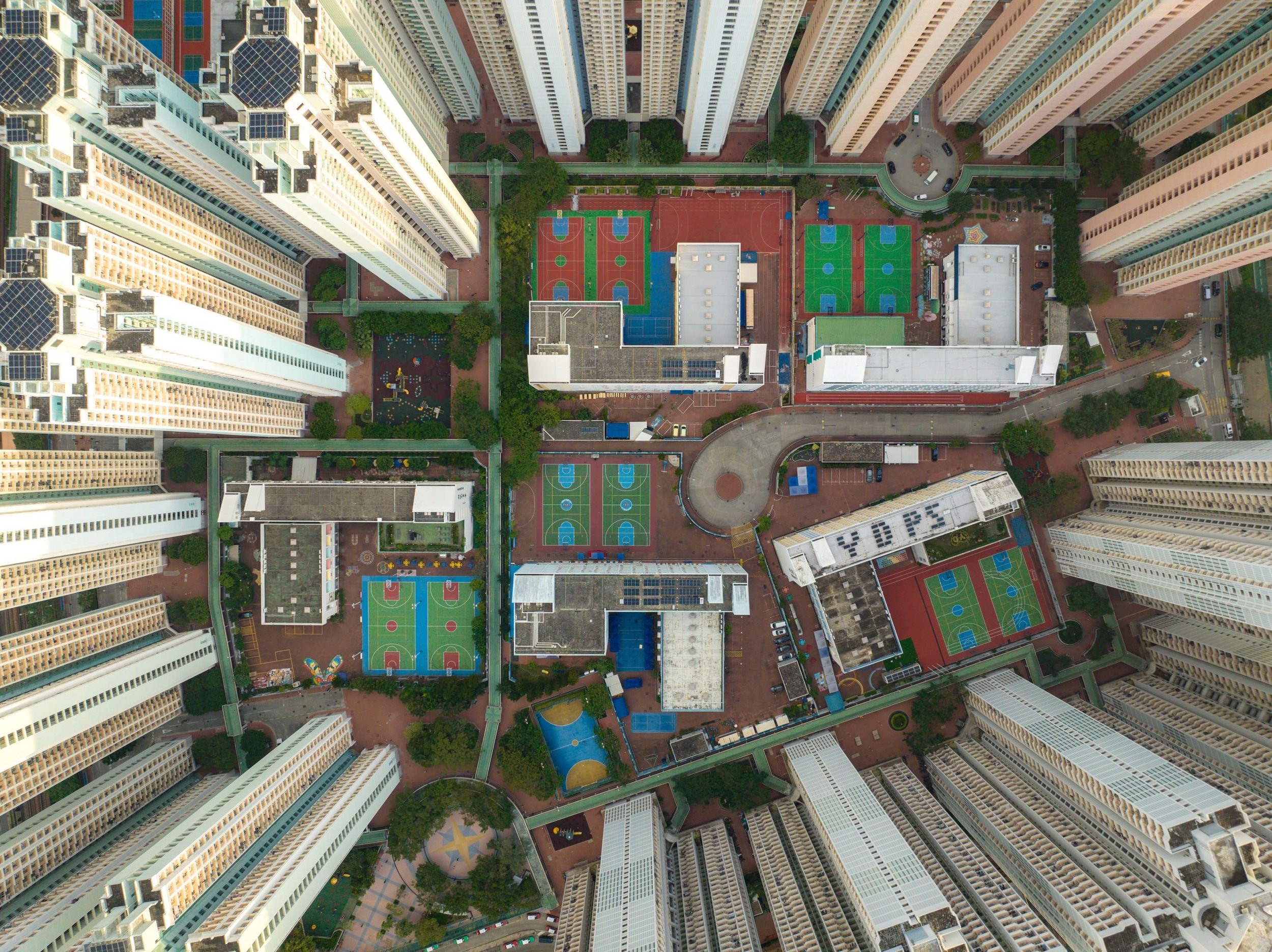
Revisiting Shooting Hoops at Blue Lotus Gallery offers both a look back at the project that helped define Bell’s career and a reimagining that keeps it open, alive, and visually compelling. What remains constant is the work’s ability to transform a familiar public space into a lens through which Hong Kong’s density, creativity, and complexity can be seen anew.
Alongside the exhibition, visitors can also explore the expanded world of Shooting Hoops through the second edition of the book, available at the gallery throughout the show. A newly released double-sided 1,000-piece puzzle extends the project into a tactile, playful format, inviting a different kind of engagement with Bell’s imagery.