
City of Lights: Keith Macgregor on documenting Hong Kong’s lost neon nightscapes
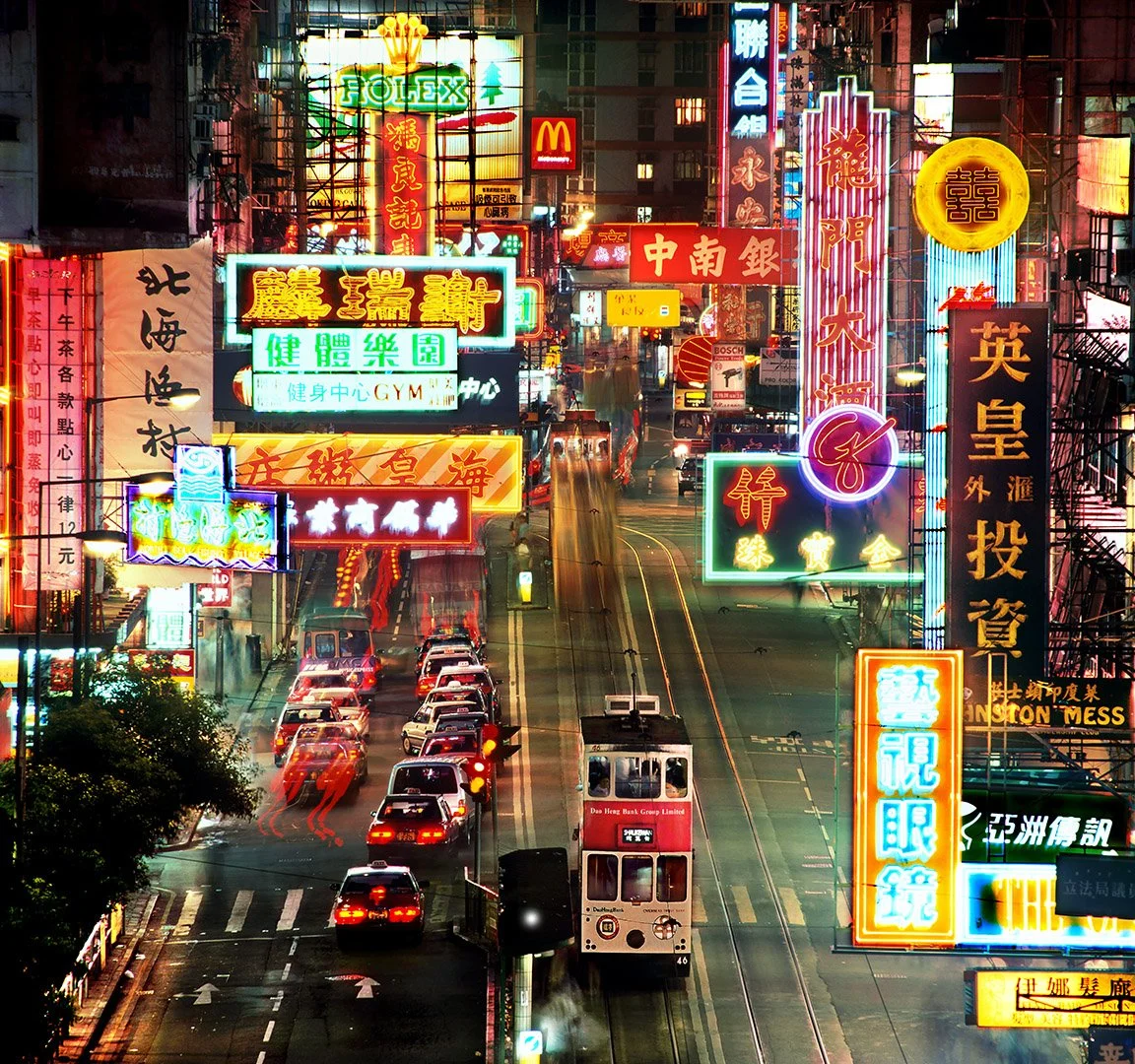
Johnston Road at Night (KM-13N)
In the 1970s, Hong Kong’s nightscapes were awash with neon. Streets like Nathan and Jordan Road were defined by a dense, overlapping canopy of glowing glass tubes, casting saturated crimson, emerald, and amber hues over the crowds below.
It was a captivating visual spectacle unique to the city, but for Keith Macgregor, who returned in 1970 after studying at Oxford University, the neon was initially just part of the background noise. Having come home to the city where his family had roots stretching back to the 19th century, Macgregor was focused on establishing his career as a commercial and portrait photographer. For him, the neon was merely a ‘living wallpaper’, a permanent, kaleidoscopic backdrop that, like most residents at the time, he simply took for granted.
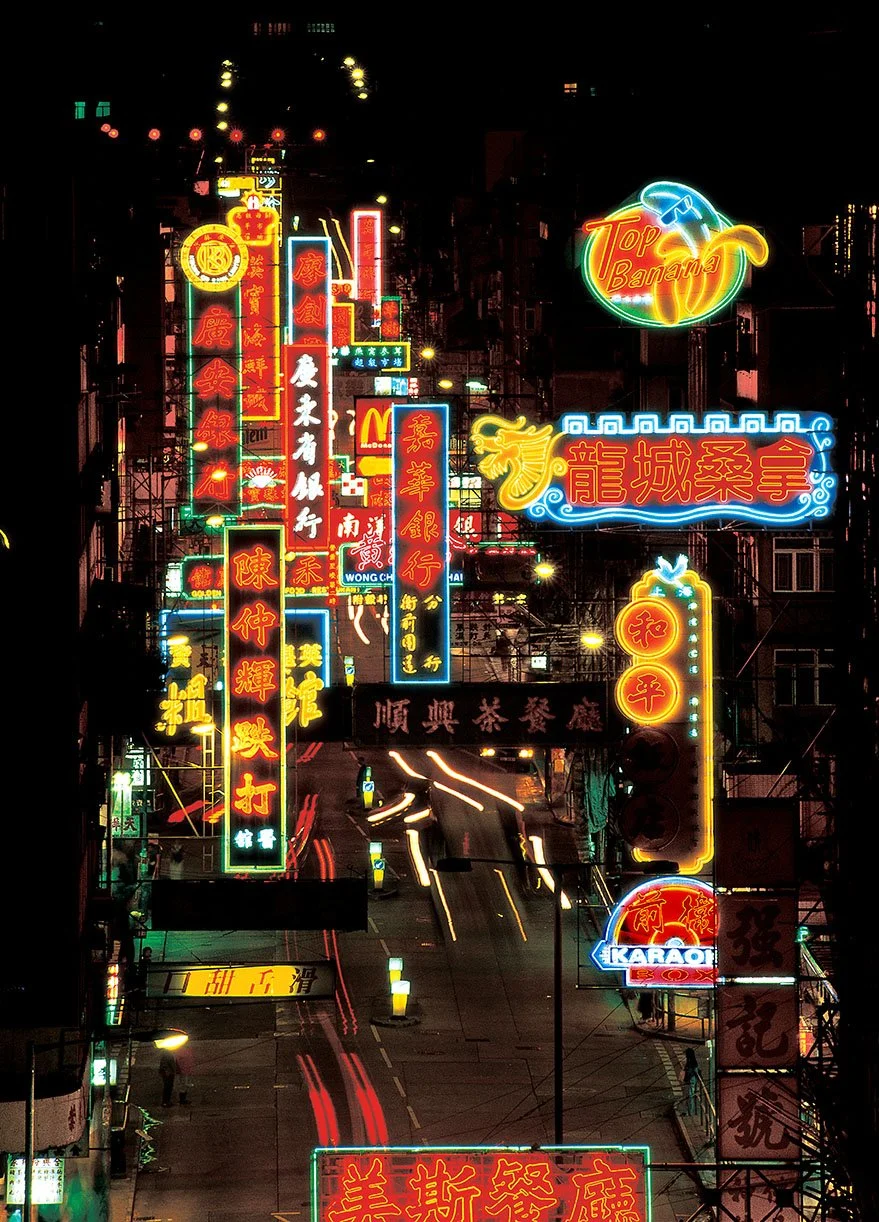
Nathan Road from Above (KMNEON-02)
That was until 1999, when lunch with friend and restaurateur Graham Redding shifted his perspective entirely. Sitting down to talk about the evolving face of the city, Macgregor realised just how much of that unique, ambient warmth was beginning to vanish as older establishments closed and modern developments took over.
The realisation sparked an immediate sense of urgency. Having already relocated to London, Macgregor began returning to Hong Kong on intense, short-term trips, embarking on a mission to document the city’s nocturnal landscape before it was gone for good.
"It became a bit of a panic," Macgregor recalls of those trips, where he had just 15 to 20 days at a time to shoot as much as possible. "Basically, it was just rushing around looking at every attractive sign."
This intense period of documentation culminated in his first major nightscape volume, Neon City, Hong Kong, at Night, published in 2002.
Now, over two decades later, Macgregor has returned to his archive to produce City of Lights (2026), a highly ambitious monograph published by Blue Lotus Gallery that focuses entirely on the legacy of the city's neon signs, their creators, and the ongoing efforts to preserve them.
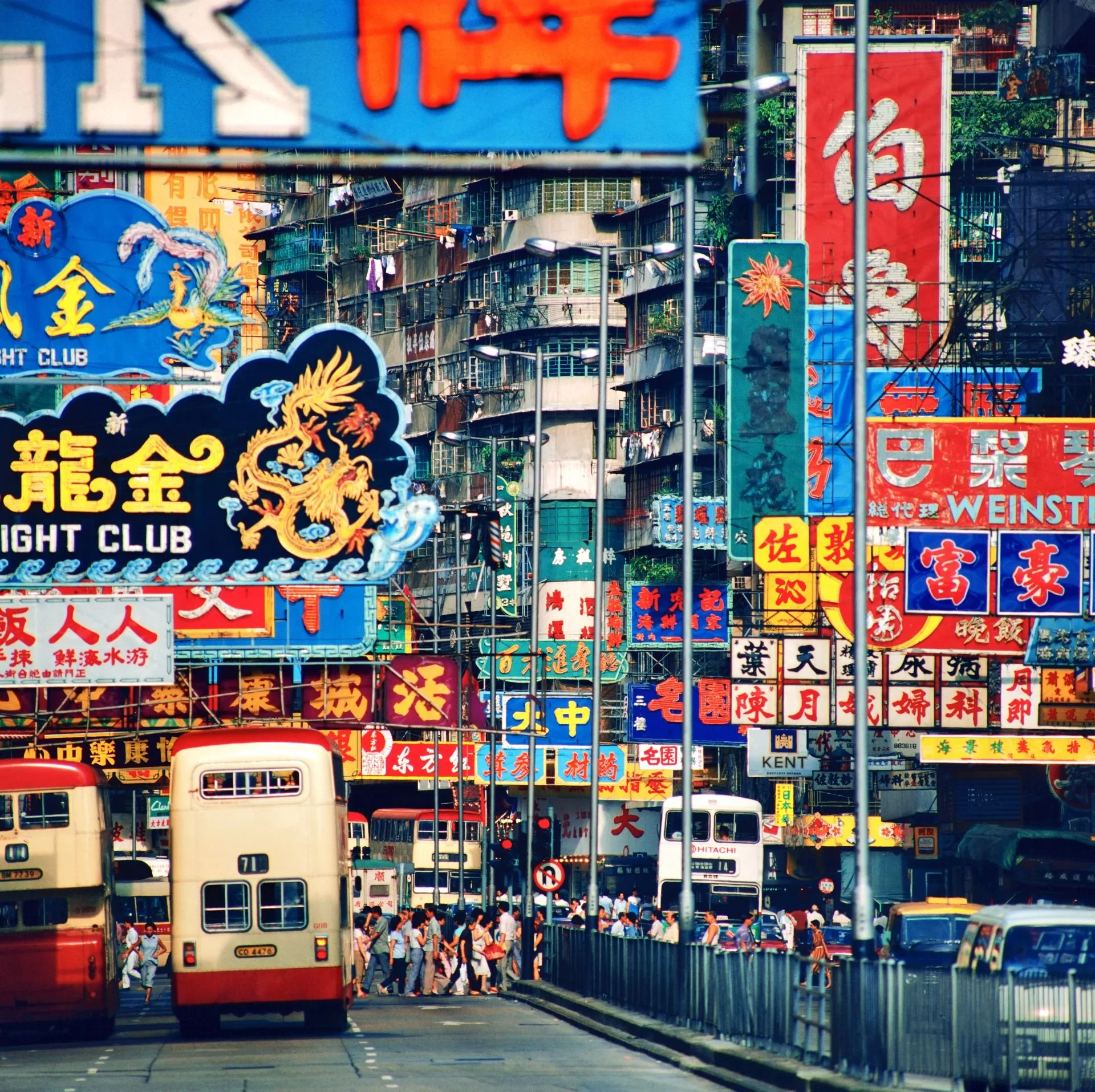
Jordan Road (KM-143 )
The transition from his early days as a commercial photographer to a dedicated archivist of Hong Kong's night streets came with its share of retrospective regrets. "I didn't go out at night into the streets as much as I should have done," he reflects. "During the night we were sort of busy with children and things like that and trying to be at home. It wasn’t until after I’d left Hong Kong that I really, really began to think about what I’d missed and what I should have been doing."
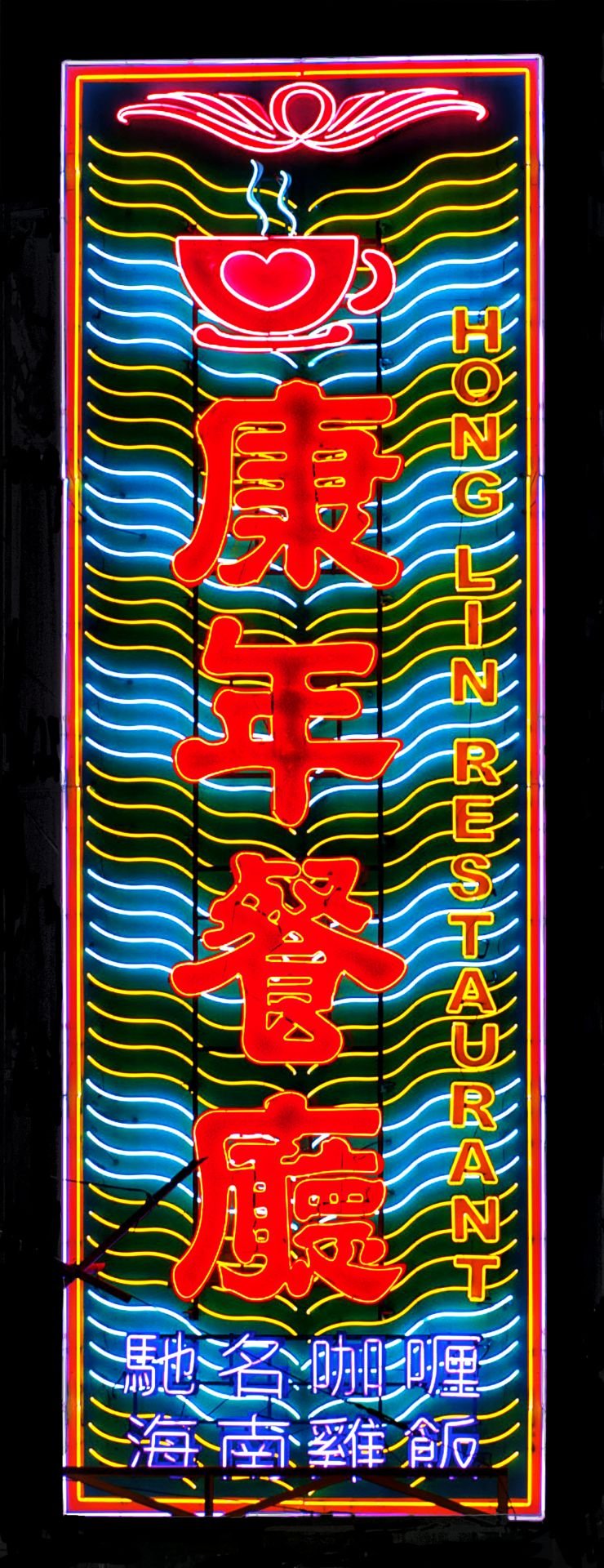
Hong Lin Restaurant (KMNEON-75 )
He notes that if his background had been more rooted in photojournalism than commercial work, his archive of that era might look very different today.
For decades, Macgregor’s commercial career was defined by clean, daylight compositions and capturing local culture, famously founding Cameraman Limited and producing the iconic postcards and calendars that came to define Hong Kong's visual identity for tourists and locals alike.
Yet, his sharp commercial eye is exactly what led him to appreciate the craft of neon not just as street signage, but as a distinct, fluid art form that modern alternatives fail to replicate.
"It was just exciting to walk down streets which were so vibrant," Macgregor says. "Although they weren’t allowed to move, you felt as though they were moving. Whereas LED now is just basic. You can’t bend. You can’t change lights and colours in between each one like you can with neon."
This appreciation for the technicality of the medium ultimately drew Macgregor into a close collaboration with Cardin Chan, a leading neon conservationist and advocate for Hong Kong's visual heritage. Over the years, Macgregor worked alongside Chan to trace the remaining fragments of the industry, bridging his photographic archive with her deep historical research and preservation efforts.
Through Chan, Macgregor was able to step off the pavement and go directly into the hidden workshops of Kowloon's few remaining sifu (master craftsmen).
He spent hours watching neon bending masters like Master Wu manipulate glass tubes imported from the US, which contain their own built-in base colours. He watched in awe as they bent the glass to match intricate floral designs or precise strokes of traditional Chinese calligraphy—a painstaking process requiring constant recalibration every few seconds.
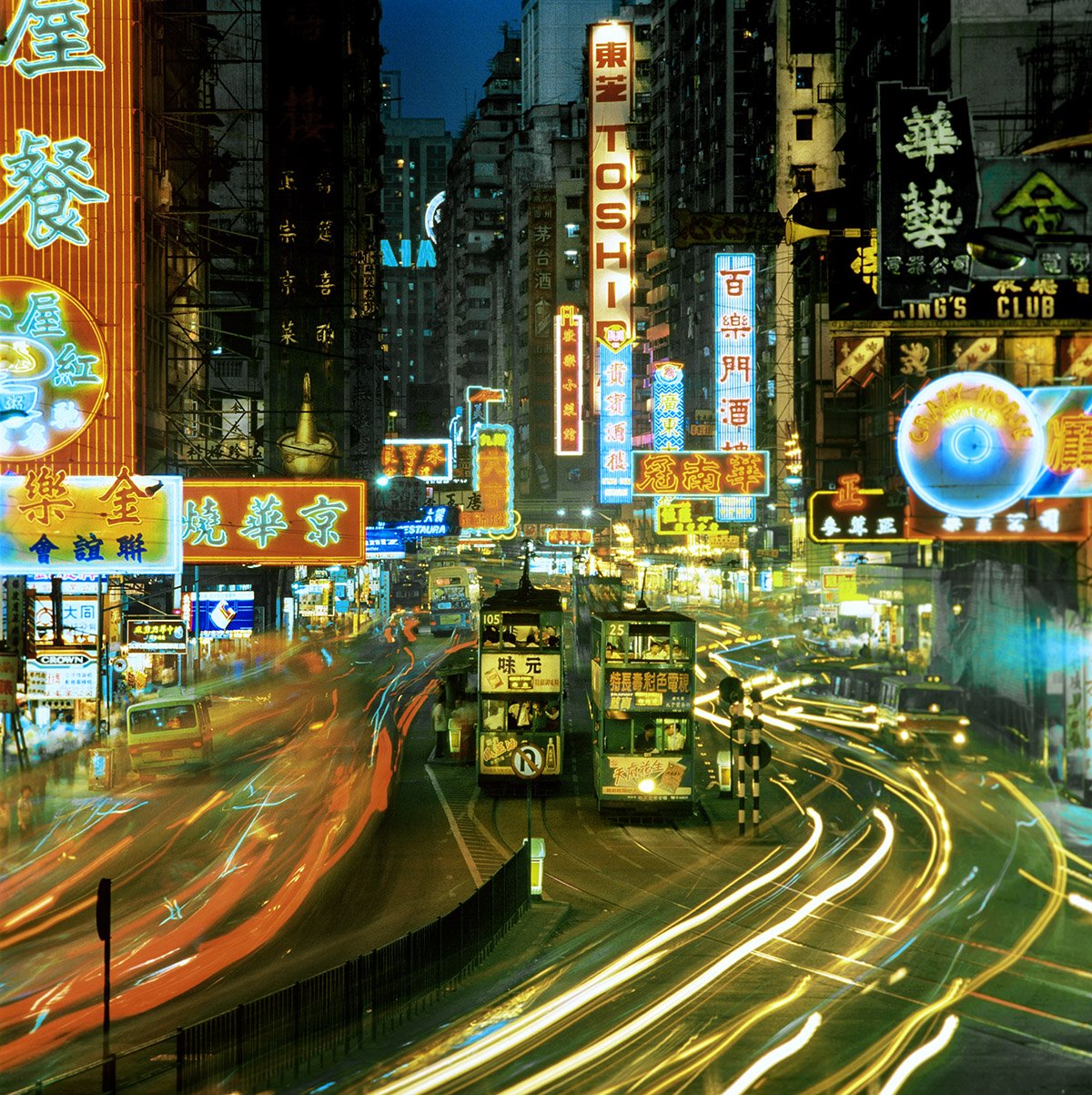
Hennessy Road at Night (KM-15)
"Once you’ve actually seen it being made, you're just in awe of the technical complications of it," Macgregor says. "I’ve got nothing but admiration for these guys because it’s a serious art form which has been underappreciated until now. I hope my book will wake people up to just what an extraordinary thing they’ve lost."
The public appetite for this nostalgia remains remarkably potent. A recent exhibition by the Hong Kong Design Museum in Sham Shui Po drew an astonishing 65,000 visitors over a two-month run, highlighting a deep, cross-generational desire to connect with the city's visual history.
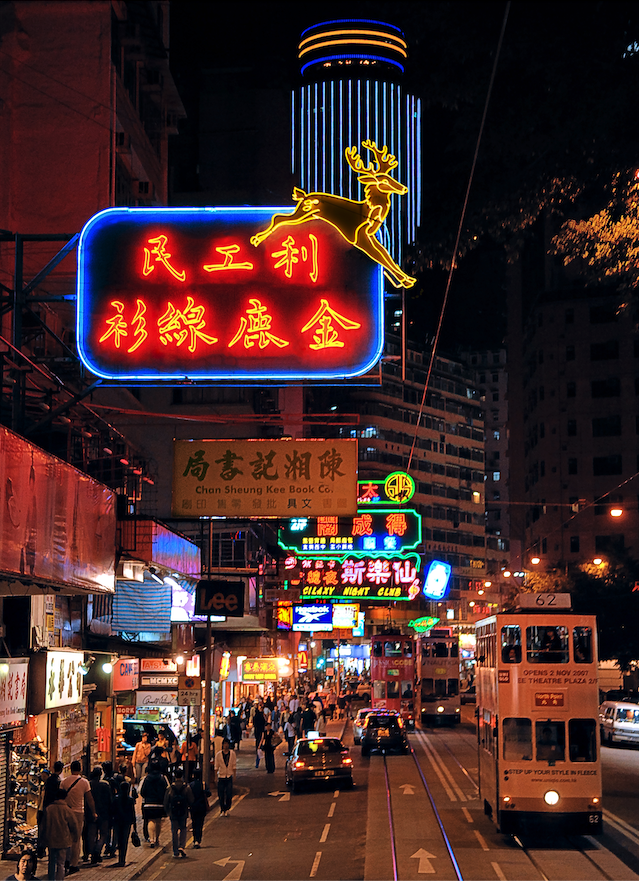
Lee Kun Man Textiles, Wan Chai (KMNEON-313A)
It is this exact energy that Macgregor sought to capture in the pages of City of Lights. Working alongside designer Siu Ding in Hong Kong earlier this year, Macgregor spent weeks refining the book's layout to ensure the presentation matched the vibrancy of the original film slides.
Rather than setting every sign against a uniform black background, the book uses shifting, saturated underlays—golds, light blues, deep browns, and dark blues—to keep the viewer’s eye moving, mimicking the experience of walking through the city at night.
"When you open the book, you don’t just think, 'Oh God, a whole bunch of neon signs,'" Macgregor explains. "Your eye is continually moving from one colour to the next. The print is just drop-dead 'wow'."
With fewer than 400 historic signs left on the streets today, City of Lights acts as the definitive ledger for a lost visual era. For Macgregor, the book simply keeps the lights on for a version of Hong Kong that is rapidly slipping away.
City of Lights, Hong Kong’s Neon Heritage is on view at Blue Lotus Gallery until 4 October. Click here for more information, and head to our online shop to purchase the book!