
Hang Tam: Photography, Memory and a Changing Hong Kong
There are parts of Hong Kong that exist today only in photographs.
The mid-century streets of a modernising metropolis immortalised by the great Fan Ho; the mosaic of neon that lit up Hong Kong through the 1970s, 80s and 90s, documented by Keith Macgregor (and recently published in the landmark photobook City of Lights); or Birdy Chu’s astonishing images of aircraft seemingly skimming the peaks of densely packed skyscrapers as they departed Kai Tak Airport, shortly before its closure in 1998. Buildings, streets, businesses, and objects once simply part of everyday life have taken on profound significance with their disappearance: fragments of another time, carrying memories that might otherwise fade.
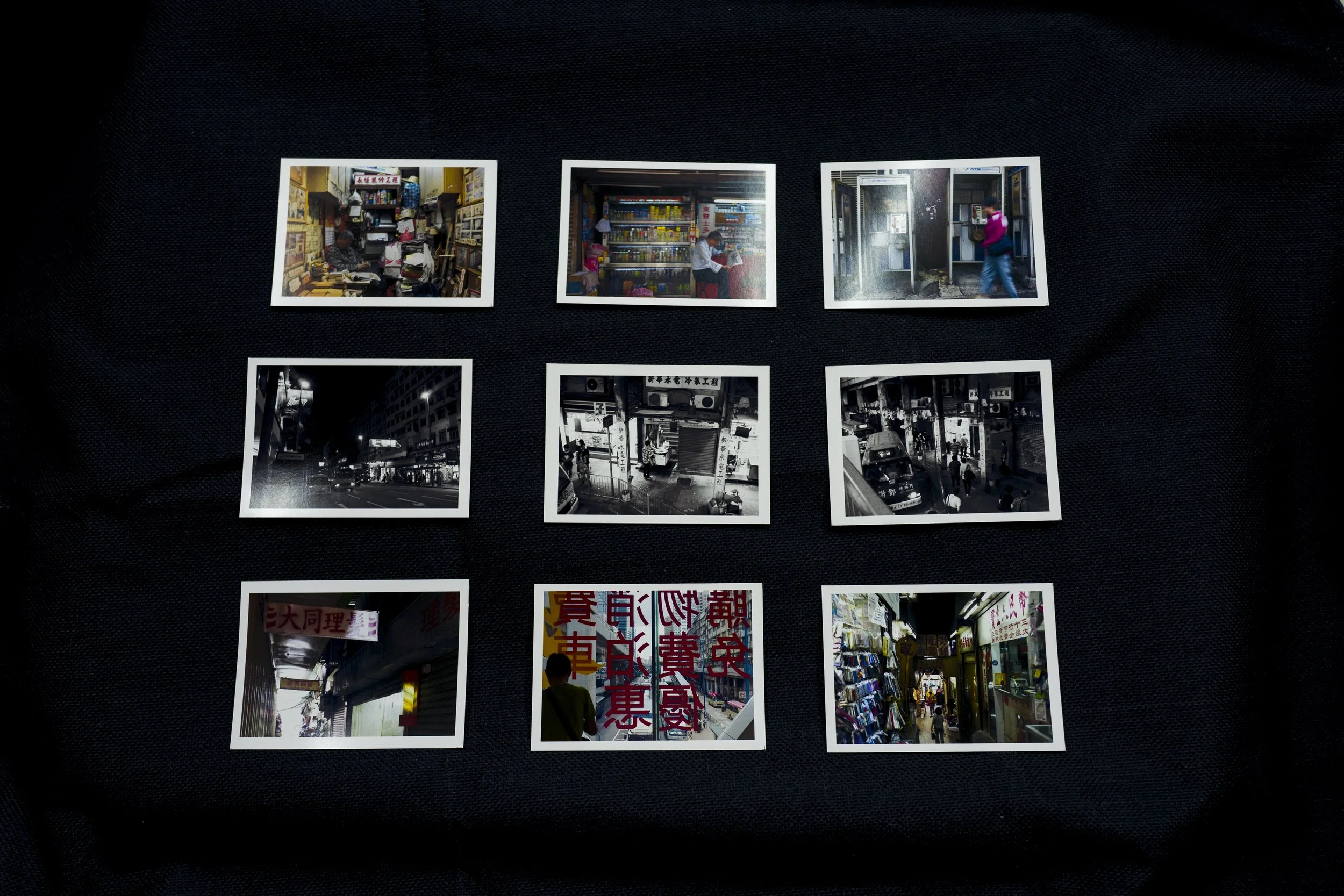
It is this relationship between photography, memory and a changing city that sits at the heart of Hong Kong photographer Hang Tam’s work. At a special event at Blue Lotus Gallery this Sunday, he will present two handmade photobooks, It really is Kwun Tong? and Hello! Do You Remember Me?, which look at very different aspects of the city’s recent past: the transformation of the Kowloon neighbourhood of Kwun Tong, and the disappearing world of public telephone booths, Yellow Pages directories and older forms of communication.
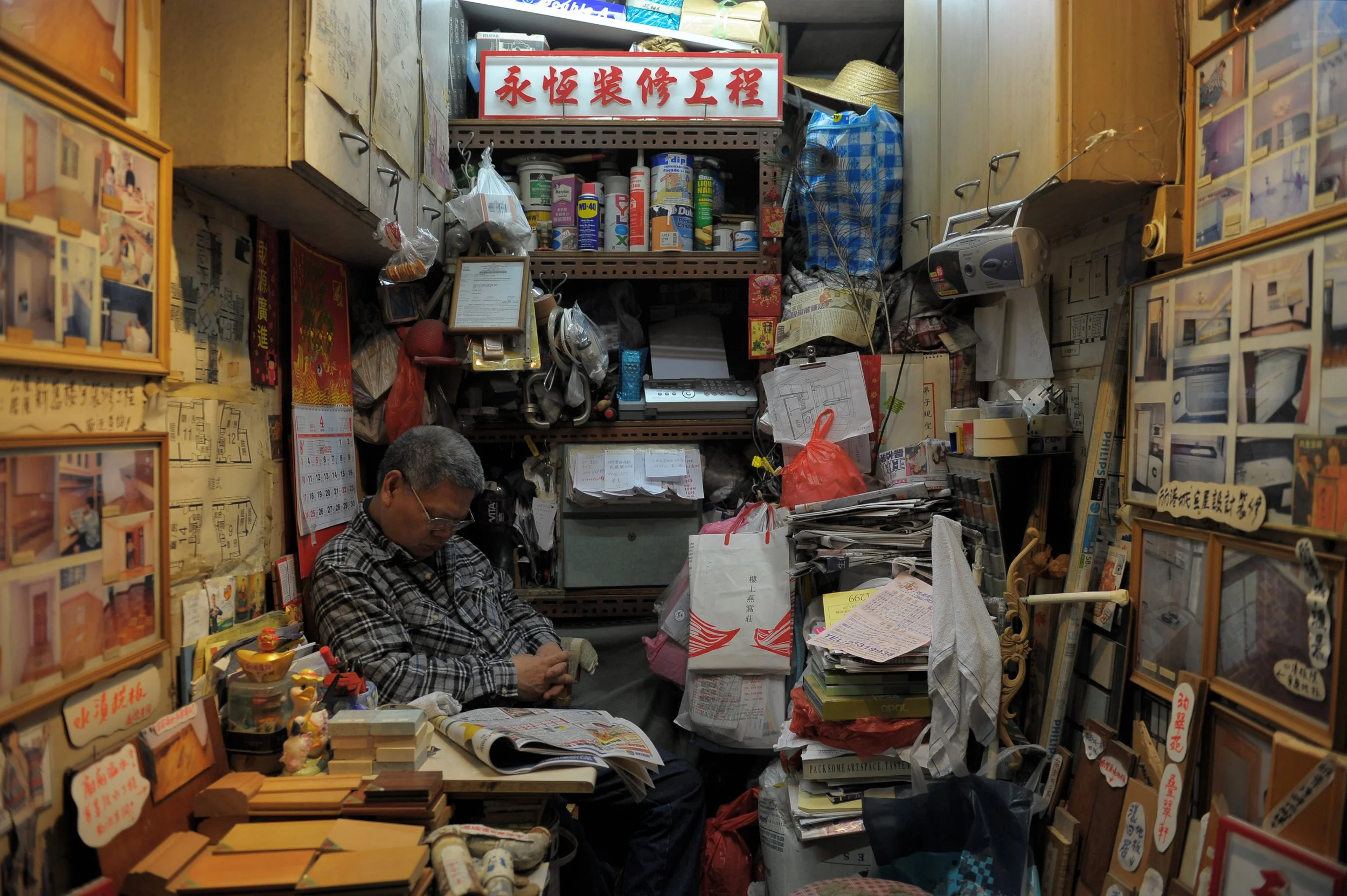
The story of It really is Kwun Tong? began around 2010, when the neighbourhood’s Yue Man Square was due for demolition. Tam went there with friends to take photographs, but at the time he had no intention of making a photobook.
“So many people had photographed Yue Man Square that I couldn’t figure out a way to make my work stand out,” he recalls.
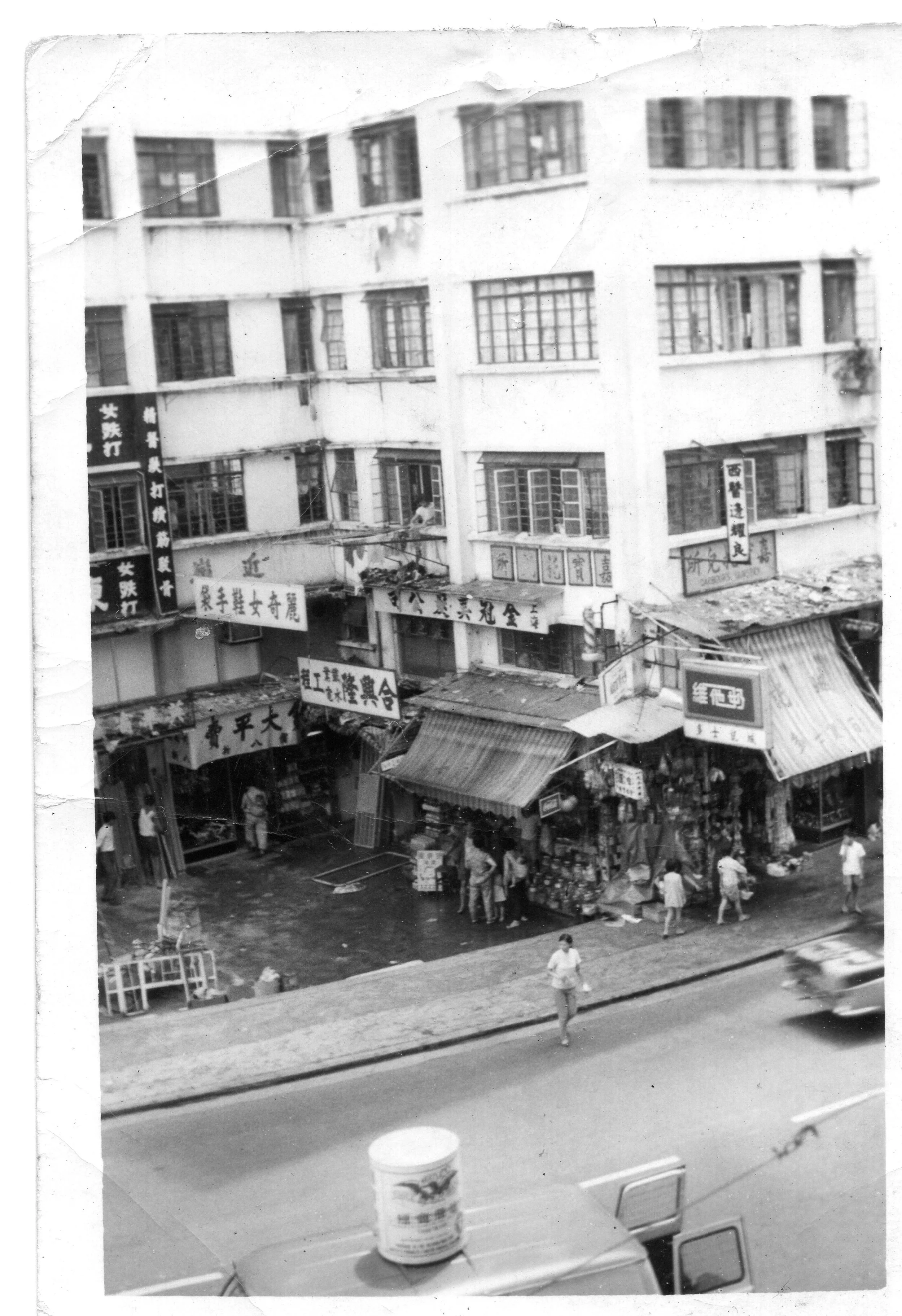
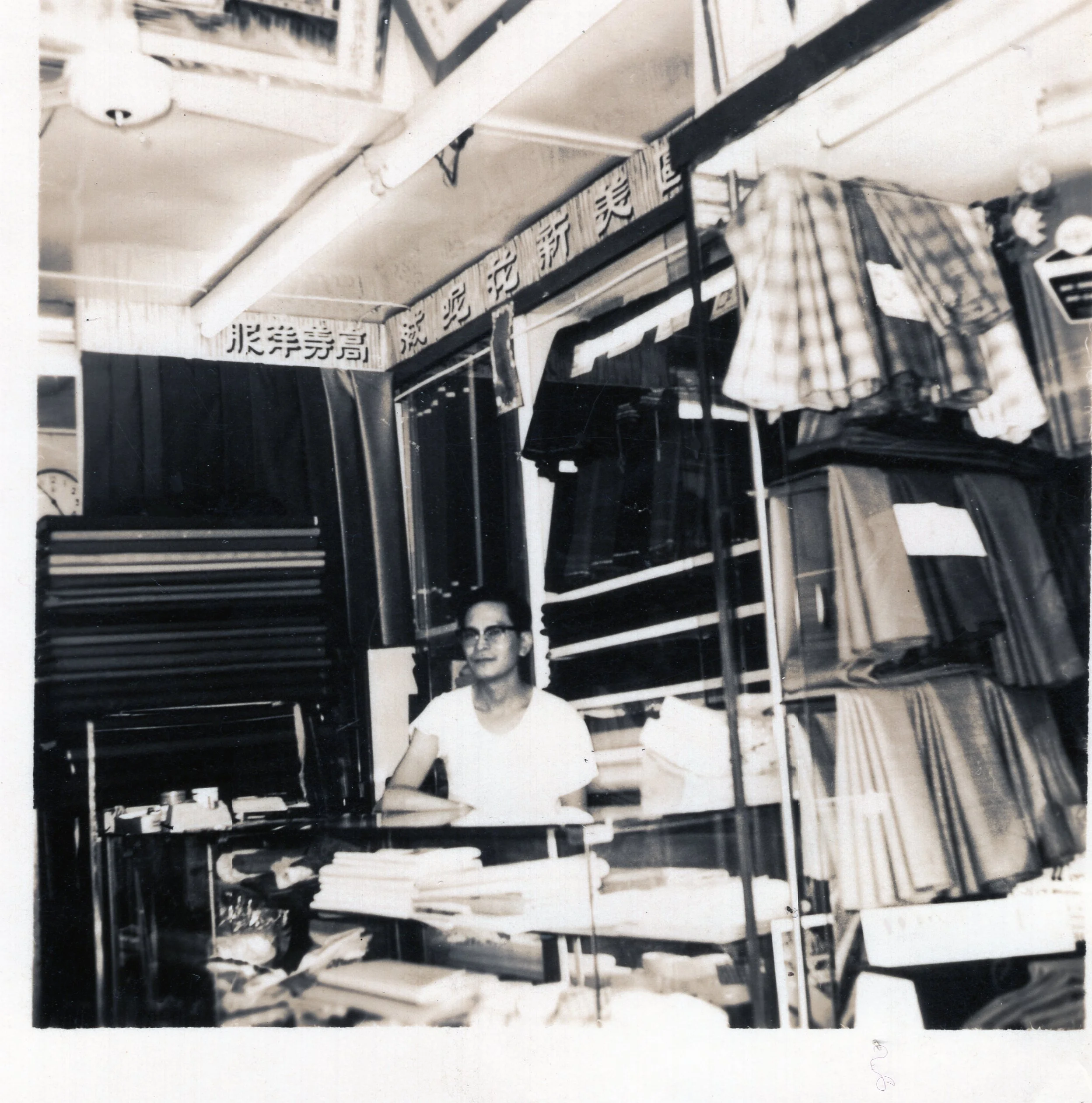
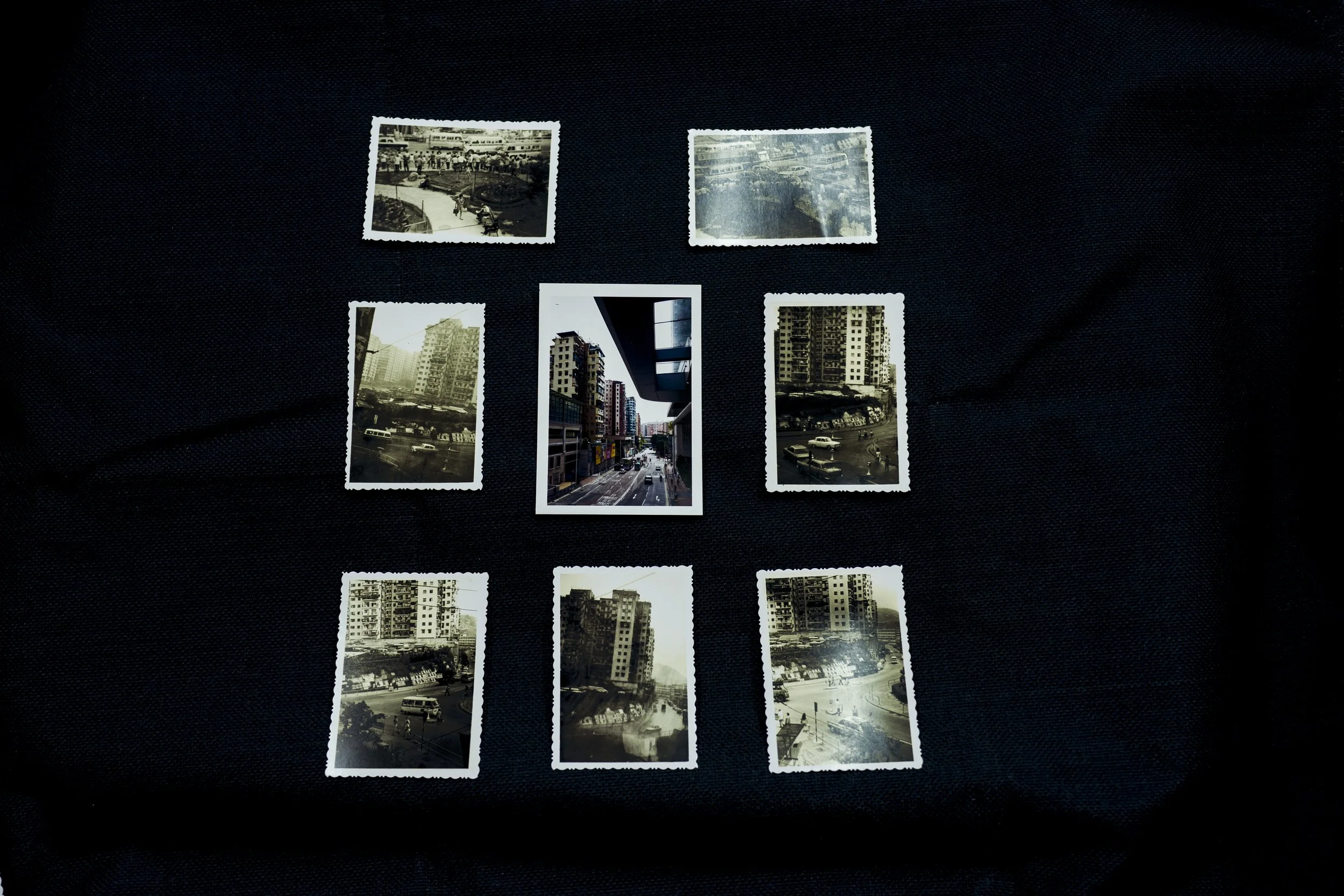
It was only in 2021, while clearing out his mother’s former home, that the project began to take shape. Among the things he found were photographs his father had taken in Kwun Tong in the 1970s.
Suddenly, Tam had a way to connect his own photographs of the neighbourhood with those taken by his father four decades earlier.
The 40-year gap was significant. For Tam, it represented an entire stage of a man’s life, but the photographs also offered a way to revisit his relationship with his father. During the 1970s, his father worked every day, with only Lunar New Year’s Day off. There was little opportunity for what Tam describes as “parent-child bonding”, and he sometimes felt distant from him. Bringing the two archives together became a way of creating a connection across that distance.
“I hoped to forge a link between his images of Kwun Tong and my own shots taken four decades on,” Tam says.
The book therefore looks at Kwun Tong not only as a changing neighbourhood, but also through the personal histories of the two people who photographed it. The same streets appear at different moments in time, carrying memories that belong to two generations.
A Box of Memories
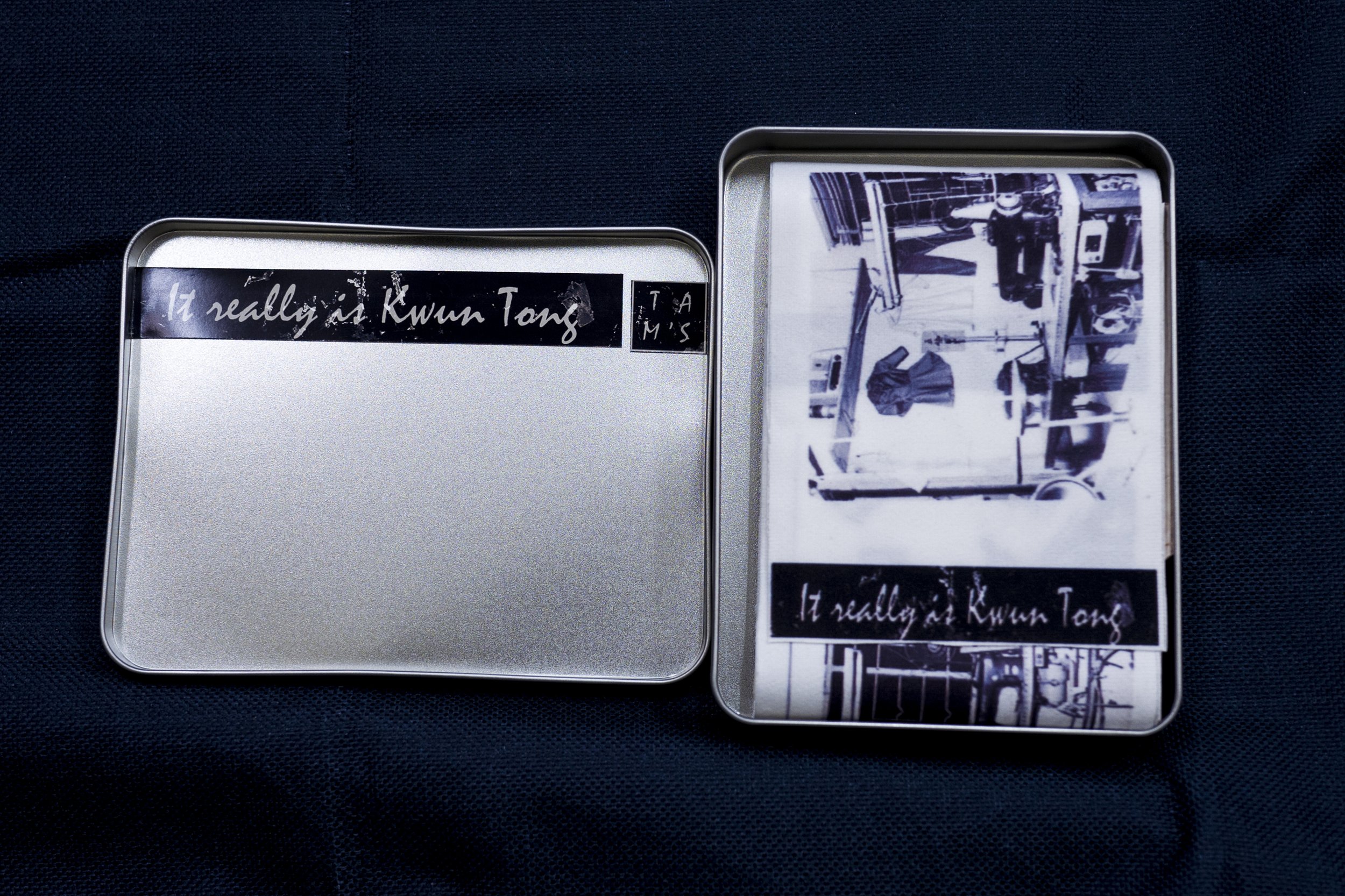
The story continues in the physical form of the book itself. It really is Kwun Tong? is presented not as a conventional photobook, but as a silver box filled with photographs, maps, letters, receipts, and other materials.
The idea came from the way older people often store things they consider precious. Important photographs, money and other valuables might be kept in metal tins, including old mooncake boxes. Tam wanted the silver box to evoke that sense of nostalgia for an earlier era.
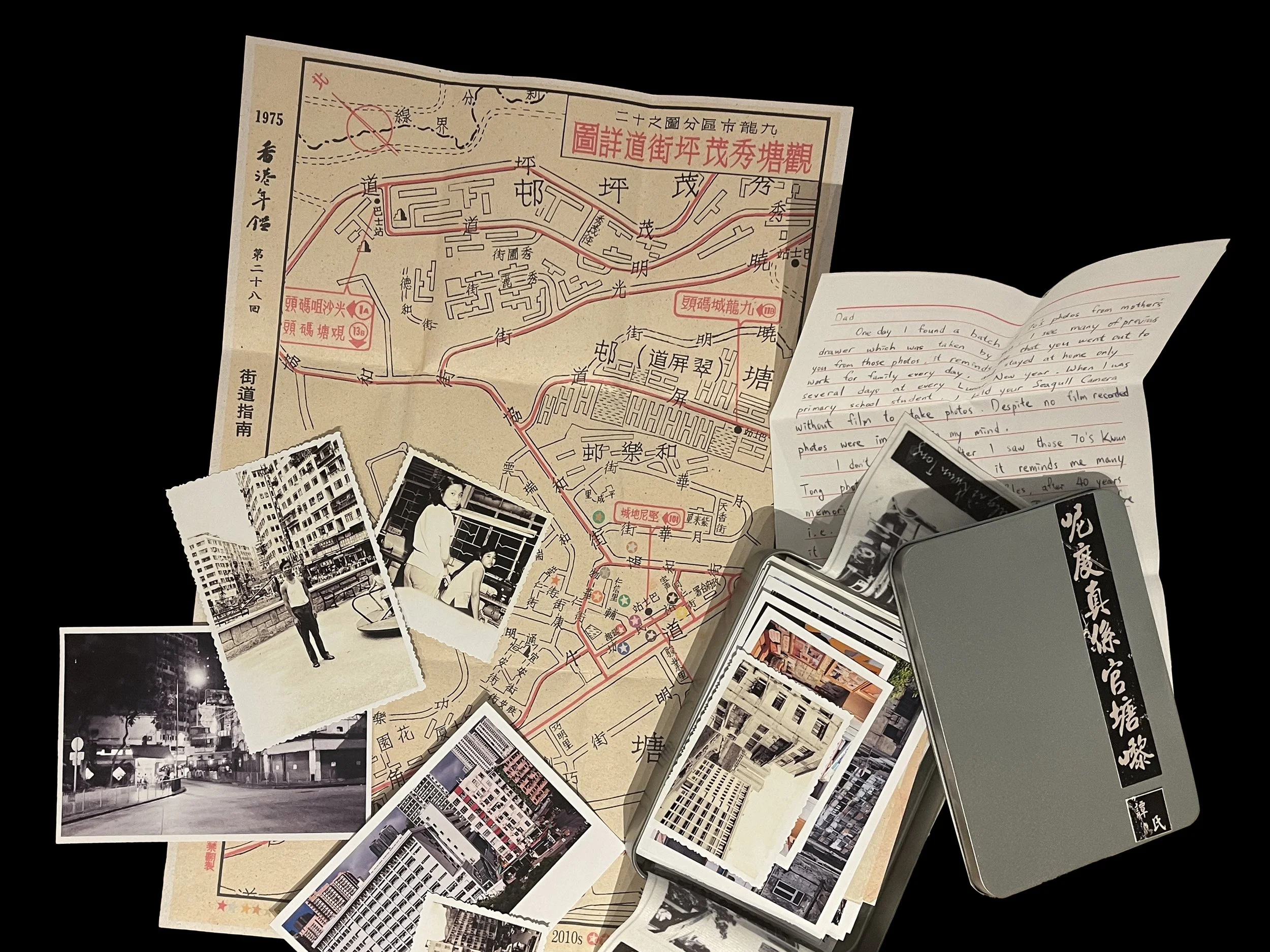
Opening it becomes part of the experience. Rather than simply turning pages, the reader searches through the contents, gradually piecing together the story of Kwun Tong.
When asked how he decided what should go inside, Tam’s answer is surprisingly simple.
“Following the same mindset as the elderly people I mentioned earlier, I included every item I deemed meaningful, filling the box to the brim.”
The accumulation is important. The photographs are not separated from the everyday materials that surround them; instead, maps, letters, receipts and other fragments sit alongside the images, creating something closer to a personal archive than a traditional photobook.
A Paper Telephone Booth
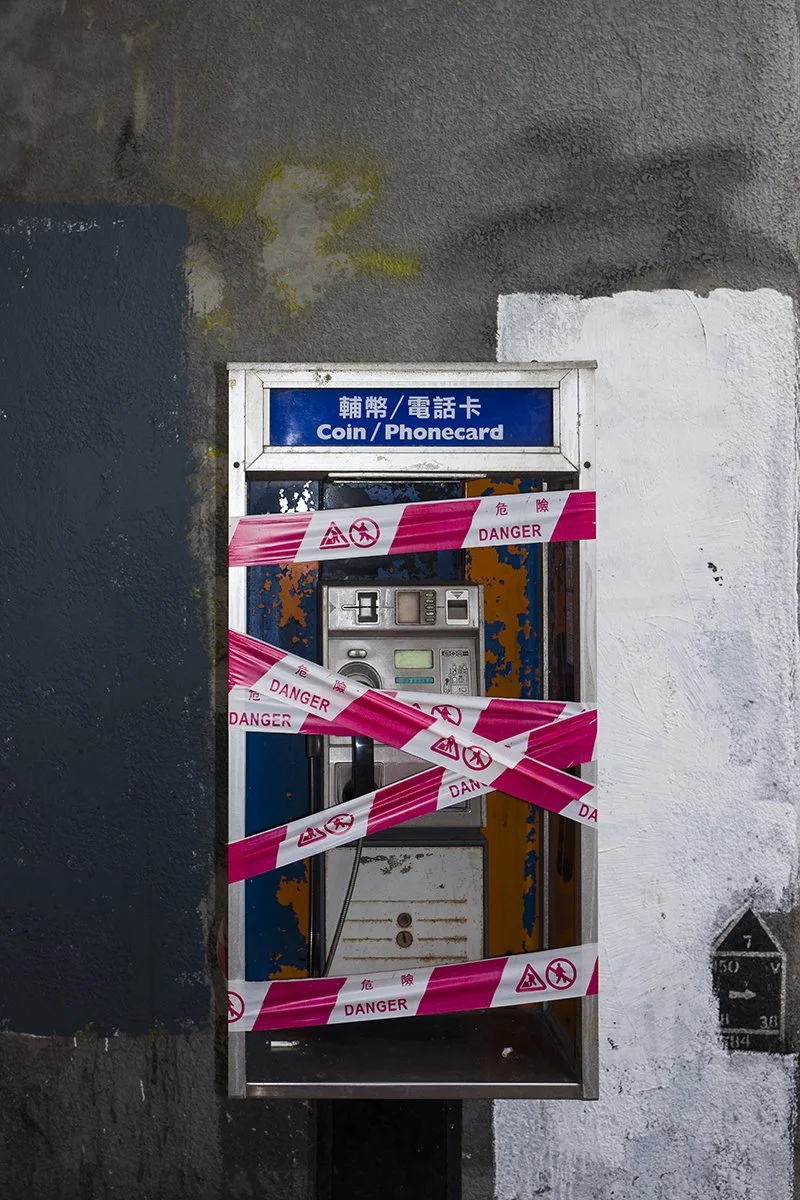
Tam’s latest book, Hello! Do You Remember Me?, moves from one neighbourhood to another, disappearing part of everyday Hong Kong: the public telephone booth.
The book was shortlisted for the Luma Rencontres Dummy Book Award at Les Rencontres d’Arles and brings together photographs of telephone booths, old telephone directories and telecommunication objects from bygone eras, alongside familiar lines from popular films.
For Tam, the subject is also connected to his own experience. He recalls once leaving his mobile phone at the office and only realising when he arrived at the train station. He went into a public telephone booth to call the office and check whether his phone was still there. He picked up the receiver, inserted a one-dollar coin, and then realised he couldn’t remember the office telephone number.
“It was a half-hearted use of the booth, I suppose,” he says.
The story is amusing, but it also illustrates how completely the role of the telephone booth has changed. Once an essential part of urban life, it has become an increasingly unfamiliar object, replaced by a form of communication that is immediate, personal, and almost always carried in our pockets.
In Hello! Do You Remember Me?, Tam brings together these fragments of an earlier communication culture. The telephone booth becomes, in effect, a book — a piece of “paper architecture” that can be opened and explored.
By turning these remnants of an earlier era into a book, Tam gives them a new physical life, allowing readers to encounter them not just as images of the past, but as objects and memories that can still be opened, handled, and revisited.
Making the Books
Although both books are carefully constructed objects, Tam’s decision to make them by hand is not purely an artistic one.
“Primarily financial practicality,” he says.
Handmade books can be produced in small quantities, or made only when orders are placed, avoiding the costs of large-scale publishing and storage. Tam says he would be open to working with a publishing house if a suitable opportunity arose, but for now the handmade format allows him to produce the books independently and in small editions.
It also means that the physical experience of the book becomes part of the work itself. In It really is Kwun Tong?, the reader opens a box and searches through its contents. In Hello! Do You Remember Me?, the book becomes a kind of paper telephone booth. In both cases, the form is closely tied to the memories being explored.
Photographing a Changing City
The two books form part of a wider interest in Hong Kong and the changes taking place around Tam. He is also working on a third project about the city’s disappearing neon signs.
Yet Tam is hesitant to describe his work simply as an attempt to document a city in transition.
“Sometimes I’m unsure whether I’m actively photographing Hong Kong’s transformations, or simply capturing the city as it changes around me,” he says.
That distinction is revealing. Rather than setting out to create a definitive archive of everything that is disappearing, Tam seems to photograph what catches his attention as he moves through the city. Only later can those photographs take on the significance of historical documents.
As old elements fade and new ones emerge, photography gives him a way to respond to those changes, even when he finds them difficult to put into words. He points to two academic papers written since 2025 by Professor Akira Yamamoto of Chuo University in Japan, which examine his work and his relationship with Hong Kong in greater depth.
For Tam, however, the most important response may not be something that can easily be explained. It is something that happens when another person encounters the photographs.
“I hope readers can resonate with my work,” he says, “and that looking at my photographs feels like they are taking the journey of shooting alongside me.”
That journey is what both books ultimately offer: a way to move through fragments of Hong Kong’s past, to handle them, look at them again, and perhaps recognise something of the city — or of our own memories — in the process.
Meet Hang Tam at Blue Lotus Gallery
Hang Tam will present It really is Kwun Tong? and Hello! Do You Remember Me? at Blue Lotus Gallery on Sunday, September 6, 2026, from 15:00–17:00. He will share the stories and creative processes behind the two books, sign copies, and have a limited number of handmade editions available for purchase.
More information here.